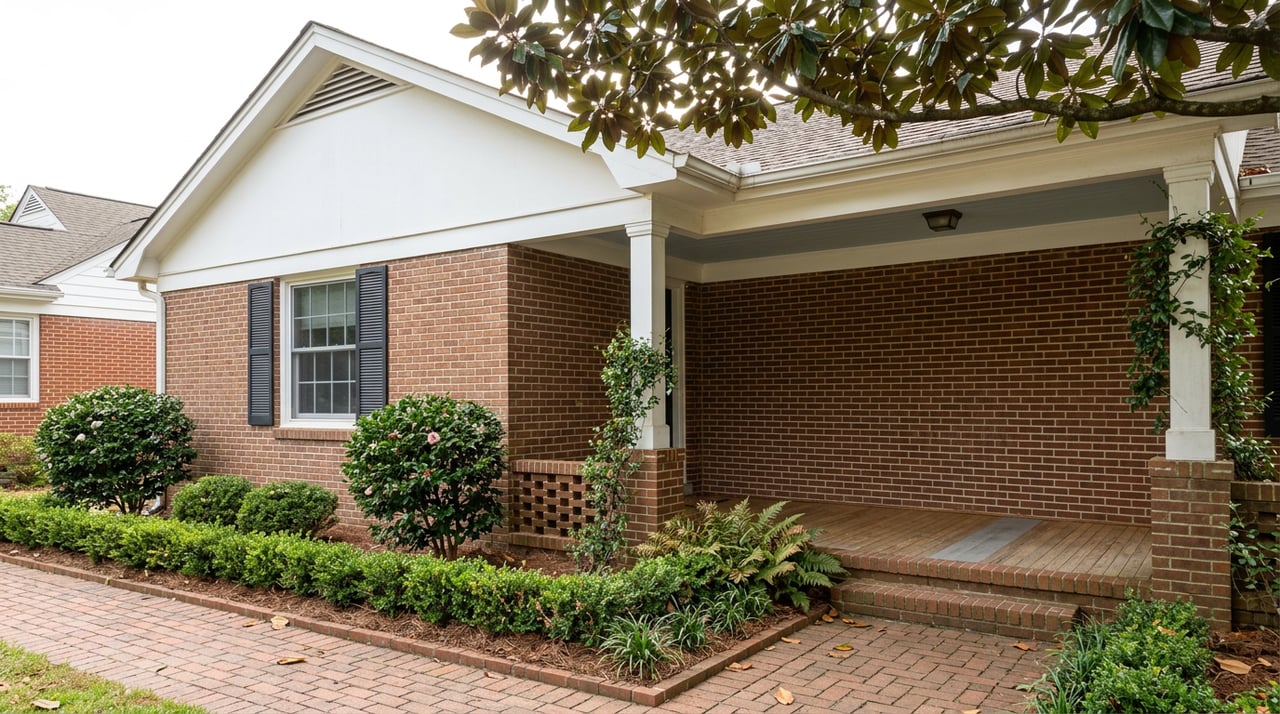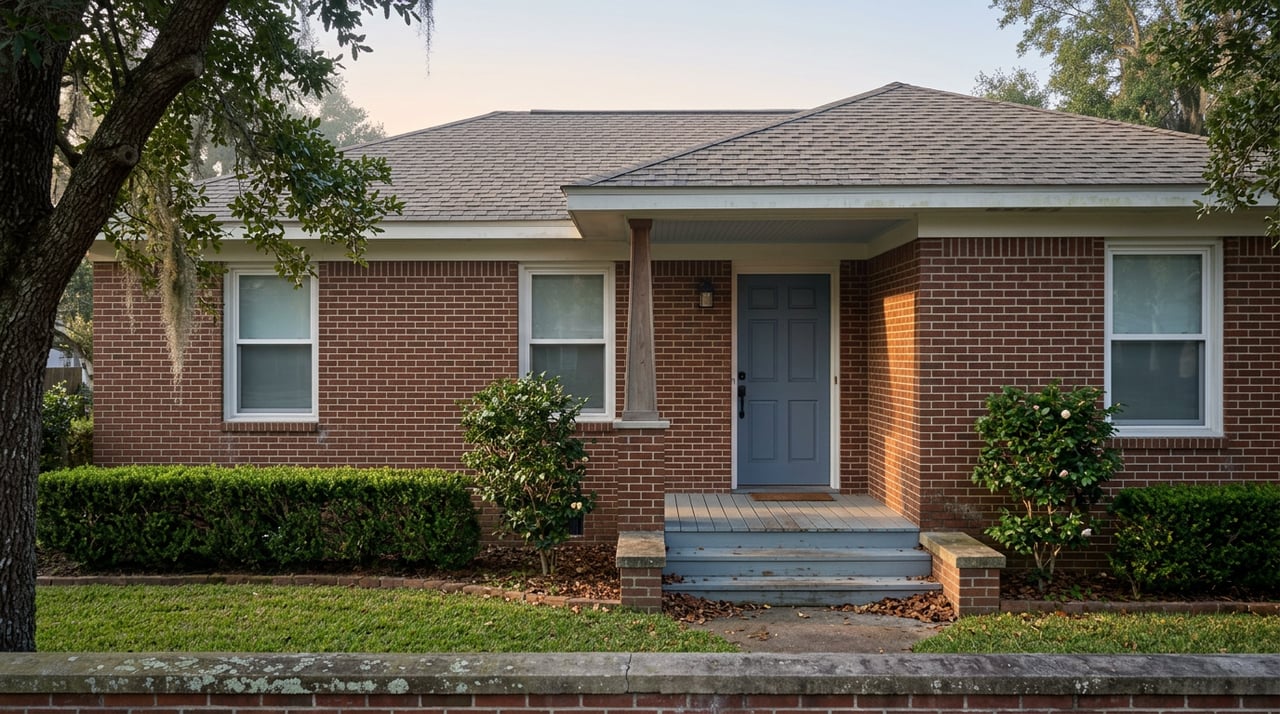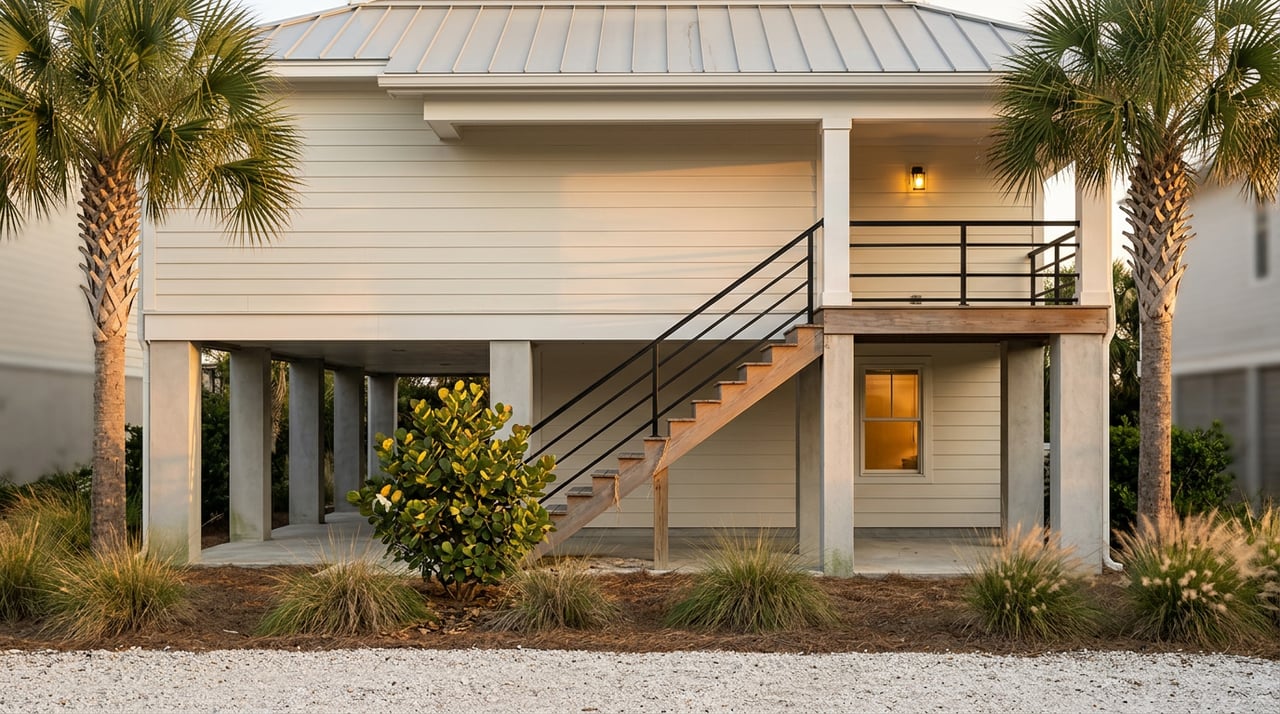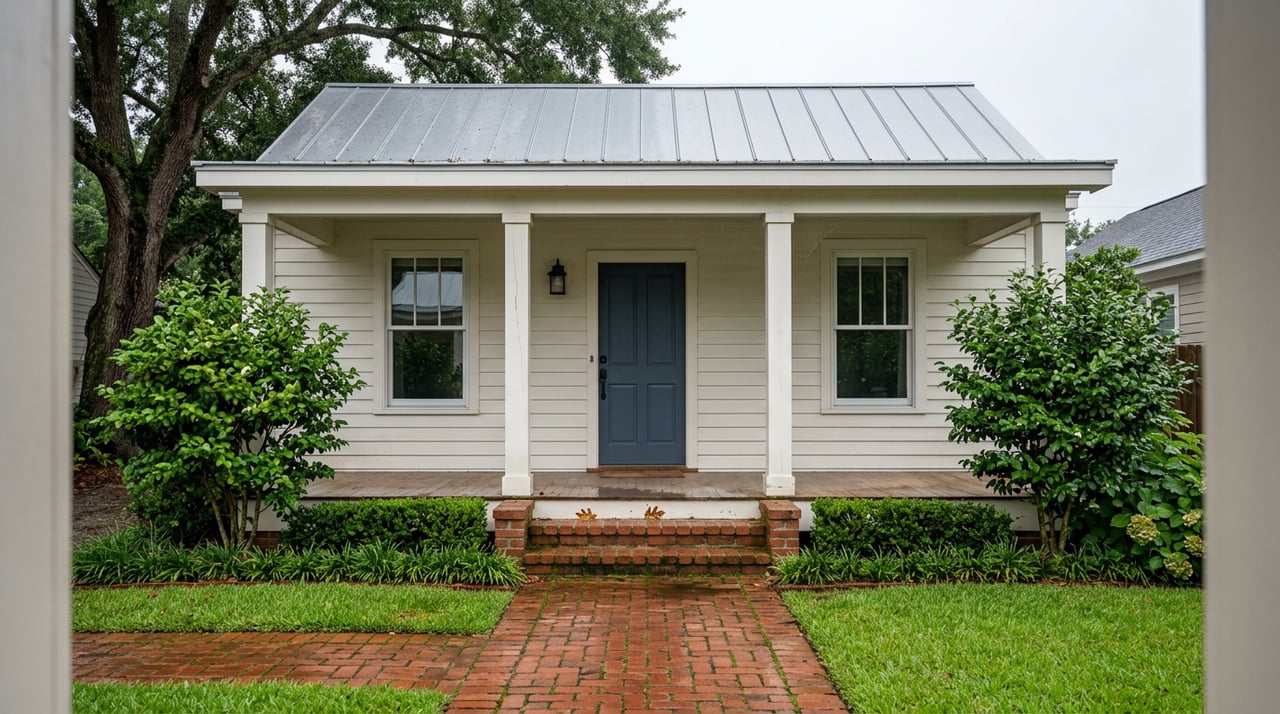
Picture two cottages a few blocks apart in downtown Fairhope. Same era, same footprint, same asking price. One closes with a warranty deed. The other closes with a lease. The second cottage's owner will pay a bill every year that the first owner never sees on their statement, and the listing sheet rarely spells out why.
That is the practical shape of buying property inside the Fairhope Single Tax Corporation, a nonprofit land trust founded in 1894 that still leases a meaningful share of the city more than 130 years later. Most buyers discover the lease during a walk-through or a title search. The better time to find out is before you write an offer, because the arrangement changes what you own, what you owe annually, and in some cases how a lender looks at the file.
The boundary you cannot see from the sidewalk
Fairhope was founded by 28 families who left Des Moines, Iowa in 1894 under Ernest B. Gaston, aiming to build a community around Henry George's 1879 book Progress and Poverty. The group pooled its money and bought land along Mobile Bay, but the settlers were not moving into empty country. Other people already owned parcels nearby, so the colony could only purchase what happened to be for sale at the time. That single fact from the 1890s still shapes the map today. Colony land is not a neighborhood with a clean border. It is a checkerboard, mixed block by block and sometimes lot by lot with privately owned, fee-simple land.
Public estimates of how much land the corporation still controls vary by source, from roughly 4,000 acres to closer to 4,600, and from a fifth to a quarter of the city depending on which figure you use. The range itself is a useful reminder: you cannot eyeball this from the street or assume based on a neighborhood's reputation. The only way to know whether a specific address sits on Colony land is to check the title.
What the lease actually buys you
Buy a house inside the Corporation's boundary and you own the house, the porch, the fence, every improvement on the lot, outright. What you do not own is the ground underneath it. Instead you receive a 99-year renewable lease, and you pay the Corporation an annual rent built from three stacked pieces: the property taxes that would be owed to the city, county, school district, and state if the land were privately held, an administration fee to run the Corporation's office, and a "demonstration fee" calculated from the land's appraised value.
That last piece is not incidental. The demonstration fee is how the Corporation funds public projects meant to prove the single-tax idea still works. Over the decades it has helped pay for the public library, community sidewalks, the historical museum, and a hospital wing. The Corporation's own founding language is blunt about the underlying theory. As the FSTC constitution states, "there shall be no individual ownership of land within the jurisdiction of the Corporation." The land belongs to the trust. You belong to it too, as a lessee, for as long as you own the improvements sitting on top.
| Cost component | Fee-simple property in Fairhope | FSTC leasehold property |
|---|---|---|
| Ownership of the land | Included in the purchase | Leased for a renewable 99-year term |
| Ownership of the house | Outright | Outright |
| Property tax | Paid directly to the taxing authorities | Passed through inside the annual rent |
| Extra annual fee | None | Administration fee plus demonstration fee |
| Land's resale price | Set entirely by the market | Originally intended to carry no separate resale value |
The part most explainers skip
Here is where the story stops being a quirky footnote and starts being a number that matters to your budget. Henry George's original theory held that if a government captured the full annual rental value of land through taxation, the land itself would carry no separate resale value, because a buyer could get no unearned gain from simply holding it. Fairhope's founders tried to simulate that inside one small town. In theory, when a lessee sold their improvements, the price reflected only the value of the house, not the dirt.
That theory did not survive contact with the twentieth century. The Great Depression strained lessees so badly that the Corporation relaxed its rent collection, a compassionate move at the time that also loosened the system's original discipline. By the 1980s, restrictions meant to prevent lessees from profiting off the underlying lease itself had been so widely worked around that the Corporation simply stopped enforcing them, according to reporting in Slate. Sellers had already found workarounds, listing token personal property at inflated prices to move money for a lease transfer that was not supposed to carry a premium. Slate's account puts it plainly: a lease that itself might fetch only a few thousand dollars would come bundled with a broken-down tractor in the backyard that sold, "with a wink, for $150,000."
Once that dam broke, Colony leasehold property started trading the same way fee-simple property does everywhere else: priced by the market, driven by demand, fully speculative. The one-sentence version of the mechanism most guides never spell out is this. The lease was designed to make the land free by taxing away its resale value. What actually happened is that the land kept its market value anyway, and the annual rent got added on top of it rather than replacing anything. You are not trading ownership for a discount. You are paying full market price for the house and then paying a separate bill every year that a fee-simple neighbor across the street will not.
What that addition looks like in dollars
The size of that annual bill depends entirely on the appraised value of the underlying land, so there is no single number that applies to every Colony address. But at least one documented account gives a sense of scale. Writing about his own experience, one lessee described paying close to $3,000 more per year than his non-lessee neighbor on comparable land along Highway 181, a gap he attributed directly to the stacked rent structure. That figure will not transfer to a downtown cottage lot, where land values and demonstration fees are calculated differently, but it illustrates that the surcharge is not a rounding error. It is a real, recurring cost that belongs in your monthly budget the same way an HOA fee or a flood policy would.
Where this surfaces at the closing table
The lease status of a property is not just a curiosity for the listing description. It can change how your loan gets underwritten. As one relocation resource focused on the area puts it, leasehold properties can require special handling from lenders and title companies, and the arrangement that seems ordinary to a longtime Fairhope resident can be unfamiliar to an underwriter who has never reviewed a 99-year renewable ground lease before.
Before you write an offer on a Colony address, it is worth asking a few direct questions:
- Is this specific lot leasehold or fee simple? The patchwork boundary means you cannot assume either way.
- Does your lender's specific loan program accept a 99-year renewable ground lease, and how does the appraisal treat the land component?
- What is the current annual rent, and how has it changed over the past several renewal cycles?
- Is the lease transferable to you cleanly at closing, or does the Corporation require its own review or orientation step first?
- How many years remain on the current lease term, and what does renewal typically involve?
None of this makes Colony land a bad purchase. Plenty of buyers value the history, the walkability, and the fact that lease fees fund the parks and library the whole town uses. It does mean the sticker price on the listing sheet is only part of the real number.
FAQ
Does every home in Fairhope sit on Single Tax land? No. The Corporation's holdings are scattered in a checkerboard pattern rather than one contiguous district, a direct result of only being able to buy available parcels back in 1894. Some blocks are entirely Colony land, some are entirely private, and some mix both on the same street.
Can I get a standard mortgage on a leasehold property? Many lenders can finance these purchases, but not every loan program treats a 99-year renewable ground lease the same way it treats fee-simple ownership. Ask your specific lender directly before you get attached to a listing.
What happens when the 99-year lease term ends? The leases are structured to be renewable, and renewal has historically been the norm rather than the exception. Confirm the specific renewal terms and timeline for any property you are considering.
Does the annual rent ever go down? The demonstration fee portion is tied to the land's appraised value, so it can move with reappraisals over time, in either direction.
If you are weighing a Colony lease listing against a comparable fee-simple option, the smartest move is running both scenarios side by side before you fall for either one. Bastion Realty South works this exact comparison for buyers across Fairhope and the Eastern Shore every week. Get Your Free Home Valuation and we will help you see the full cost of a specific address, lease and all, before you ever make an offer.