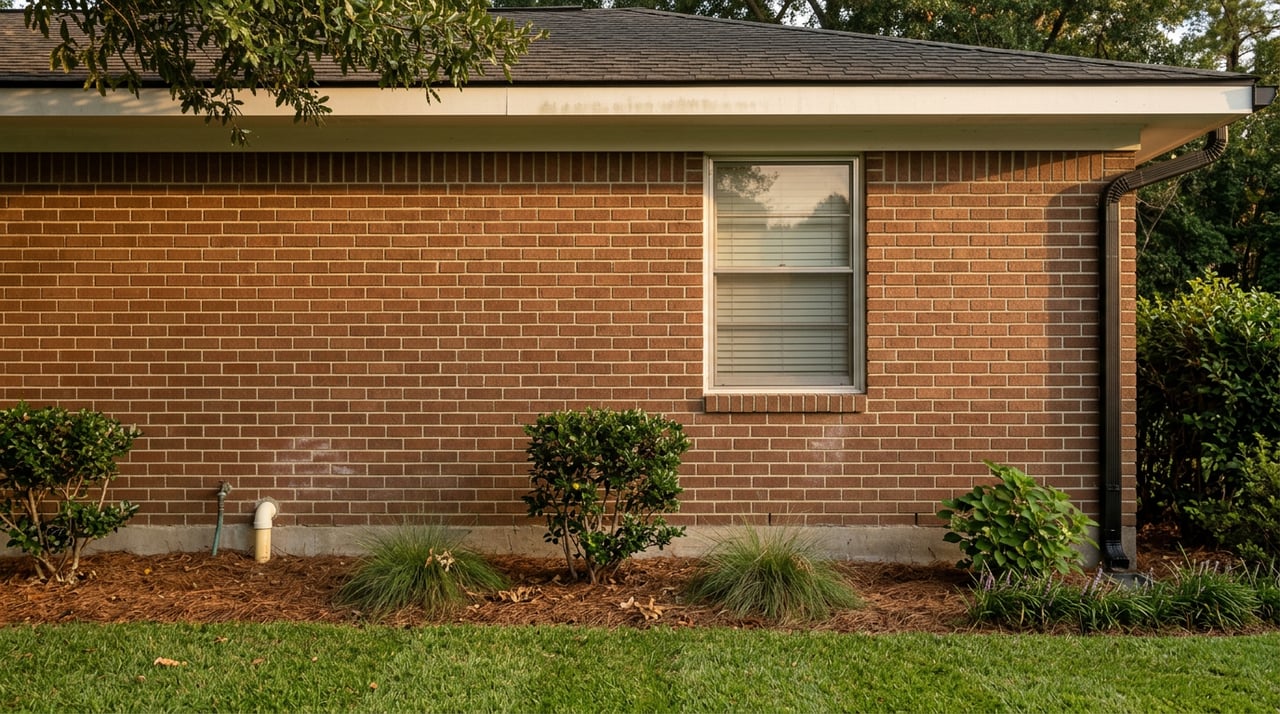
The buyer's inspector pulls up to a ranch off Chumuckla Highway with a shovel, a locator wand, and a report template that has a whole page for "on-site wastewater." The seller thought the house was going to close on the appraisal number. Three days later, an addendum lands asking for a $2,400 credit: buried tank lids, no visible risers, no permit file, and a soft patch of grass the inspector photographed twice.
That is the deal in Pace right now. The address decides which set of forms and which set of contractors you are working with, and the sticker price is only the first negotiation.
Here is the claim this post is built to defend. In Pace, the difference between a septic parcel and a Pace Water System sewer parcel changes your transaction more than a $10,000 price swing does, because it changes who has the leverage the day the inspection report arrives. Sellers who pre-empt that report two to four weeks before listing keep the leverage. Sellers who don't hand it to the buyer.
The number that reframes the Pace map
Buyers arriving from a metro market usually assume "on city water and sewer" is the default. In Pace it isn't. A Santa Rosa County utility operational status report found that inside the Pace Water System franchise area, only 43% of single-family homes were connected to centralized sewer, with the remainder on septic or other on-site systems. That means for a majority of Pace listings, the wastewater question is a due-diligence line item, not a utility bill.
Pace Water System itself is a member-owned nonprofit formed in 1964, and it runs both the potable water and the sewer service inside its franchise. Its residential sewer default is $59.10 per month at a 4,471-gallon winter average, useful context when a buyer is weighing a connected home against a septic parcel with no monthly wastewater bill but a maintenance schedule.
Who actually regulates your tank now
If you sold a Pace home before 2025, you probably remember calling the Santa Rosa County Health Department for permit history. That number still works for the file cabinet, but the regulator has changed.
As of January 2, 2025, the Florida Department of Environmental Protection manages septic permitting in 16 Panhandle counties including Santa Rosa, taking that program off the county Department of Health. The Florida Department of Health confirms the handoff and the Santa Rosa DOH page now points applicants to DEP for new installs, repairs, and tank abandonments. The rulebook itself, Chapter 62-6 F.A.C. and section 381.0065 of the Florida Statutes, has not changed. The office you file with has. Sellers whose contractor is used to walking permits into the Health Department office should confirm their installer is currently DEP-registered before scheduling any repair inside a contract window.
Why "Florida doesn't require it" is the wrong sentence
Read enough national guides and you will see the line that Florida has no statewide point-of-sale septic inspection requirement. That is technically true. It is also the sentence that gets Pace sellers into trouble.
Two things override it in practice. First, VA and FHA loans, which are common on both sides of the Pace buyer pool given the NAS Pensacola relocation flow, effectively require evidence of a functioning system, and the appraiser can flag visible signs of failure. Second, Florida sellers still must disclose all known material defects, and Florida courts have consistently held sellers accountable for concealing them. A soggy drain field patch you knew about is not "an inspection issue," it is a disclosure item.
The floor is not what the state requires. The floor is what the buyer's lender, the buyer's inspector, and Florida disclosure case law require together. Those three almost always add up to a real inspection.
The two-to-four-week pre-listing sequence
The renegotiation math is unforgiving. A cracked baffle you fix for around $200 before listing is the same defect that becomes a $2,000 credit request when the buyer's inspector finds it first. Risers to bring tank lids to grade run roughly $200 to $400 installed. Drain field replacement runs $5,000 to $15,000 for a conventional system and $12,000 to $30,000 for a mound or aerobic treatment unit. Every step below buys down that spread.
- Schedule a pump-out and inspection 2 to 4 weeks before you list. A licensed septic contractor pumps the tank, inspects the interior for baffle and wall damage, checks inlet and outlet connections, and writes a report. Named Pace-area operators include Pace Septic on Woodbine Road and AAA Thompson's Septic, which has served Santa Rosa and Escambia counties for more than 35 years at 850-994-8221.
- Install risers if your tank lids are buried. Buried lids are one of the most common inspection headaches; if the inspector can't access the tank they will either charge to dig or write "tank access not available," which reads to a buyer like a hidden defect.
- Pull your permit file. Request the property's original OSTDS permit, the as-built drawing showing tank and drain field locations, and any repair permits. Under the new structure, that request routes through FDEP for Santa Rosa County. For perk tests or new construction permits in Pace, Milton, Navarre, or Jay, sspermits.com is one of the local firms that handles the DEP paperwork.
- If you have an aerobic treatment unit, verify the operating permit and maintenance contract are current. ATUs and performance-based systems require yearly operating permits tied to an active maintenance contract with an approved provider. A lapsed ATU permit signals deferred maintenance and can force a full system evaluation to restore.
- Map the tank and drain field. Mark the lids, note the setbacks, and share the drawing with the buyer's inspector on inspection day. It cuts the inspection time and removes the "unable to locate" line from the report.
- On a private well, add a water quality test. Bacteriological and nitrate panels are cheap, and they preempt the FHA appraiser question about potability.
What the closing table actually looks like
The table below sorts the inspection-day workload by parcel type. The septic column is where most of the friction lives.
| Item | Pace Water sewer parcel | Septic parcel |
|---|---|---|
| Utility due diligence | Confirm active account, transfer service via PWS at 850-994-5129 | Confirm nothing to transfer; system runs with the land |
| Wastewater monthly cost | ~$59.10 residential default at 4,471 gal | $0 monthly, replaced by pumping every 3 to 5 years |
| Inspection scope | Standard home inspection | Home inspection plus separate septic inspection with pump-out |
| Documents buyers ask for | Recent PWS bill | DEP/DOH permit file, as-built, pump records, ATU maintenance contract if applicable |
| Common renegotiation lever | Backflow device compliance | Baffle damage, drain field saturation, buried lids, expired ATU permit |
| Replacement exposure | Utility maintains the main | Conventional $5K to $15K; ATU or mound $12K to $30K |
Two 2026 wrinkles buyers are asking about
Two current-year items are showing up in Pace inspection reports and buyer questions, and both belong in a seller's prep call.
The first is backflow. Pace Water System is currently conducting overdue testing of customer backflow devices, at the customer's expense, with failed devices requiring repair or replacement within 30 days or the service is subject to disconnection to stay compliant with FDEP rules. On a listed home, a failed backflow test the week before closing is a hard problem. Sellers should confirm their most recent annual test is on file before listing.
The second is water supply posture. On February 11, 2026, the Northwest Florida Water Management District issued a Water Shortage Warning Order calling for voluntary reductions across the district from Escambia through Jefferson counties, with the forecast through April 2026 indicating above-normal temperatures and below-normal precipitation. It does not restrict a closing. It does change how a buyer with a private irrigation well reads the yard.
What the current Pace numbers say about your leverage
Pace price data has flattened. Median sale price sat around $325,000 in Redfin's January 2026 read at about 67 days on market, and Movoto's June 2026 read put the median list at $357,000, $182 per square foot, and 77 days on market. Statewide, the Florida single-family median is roughly $425,000 with about a 4.7-month supply and homes taking a median near 84 days, and the average homeowners insurance premium is around $8,458 per year.
That combination, flat pricing plus a 67-to-77-day exposure window plus insurance cost pressure, is the market condition that turns a septic credit request into a price cut. A buyer who has already sat with a listing for six weeks and has an $8,000 insurance line on their carrying-cost sheet will not absorb a $2,000 septic surprise. They will ask the seller to. Prepping the on-lot system before the sign goes in the yard is not paranoia. It is the least expensive negotiation you will run all year.
FAQ
Is my house on Pace Water sewer or on septic? Call Pace Water System at 850-994-5129 with your address. If the utility does not show a sewer account, the property runs on an on-site system, and the Santa Rosa County Health Department septic line at 850-983-5200 can point you to the permit file now held by FDEP.
Do I have to disclose a past drain field repair if it works fine now? Florida requires disclosure of known material defects and the history that goes with them. A completed repair is not a defect, but the record of it belongs on the disclosure and in the buyer's inspection packet.
Can I sell a home with a failed septic system in Pace? Yes, but the marketing changes. Cash and renovation buyers can absorb the replacement, while VA and FHA financed buyers generally cannot close on a system the appraiser flags. Price the home to the repair or complete the repair before listing.
How long does a new DEP septic permit take? Plan on 4 to 12 weeks from first call to operating permit for a standard home project, longer in peak building season or after wet weather pushes water tables up.
If your Pace home is on septic or a private well and you are thinking about listing this year, the value of a pre-listing walkthrough is measured in avoided credit requests. The team at Jason & Charlcie Smallwood with Bastion Realty South knows which contractors move fast, which documents buyers ask for first, and how to price against the current 67-to-77-day Pace window. Get Your Free Home Valuation and let's build the plan before the sign goes in the yard.