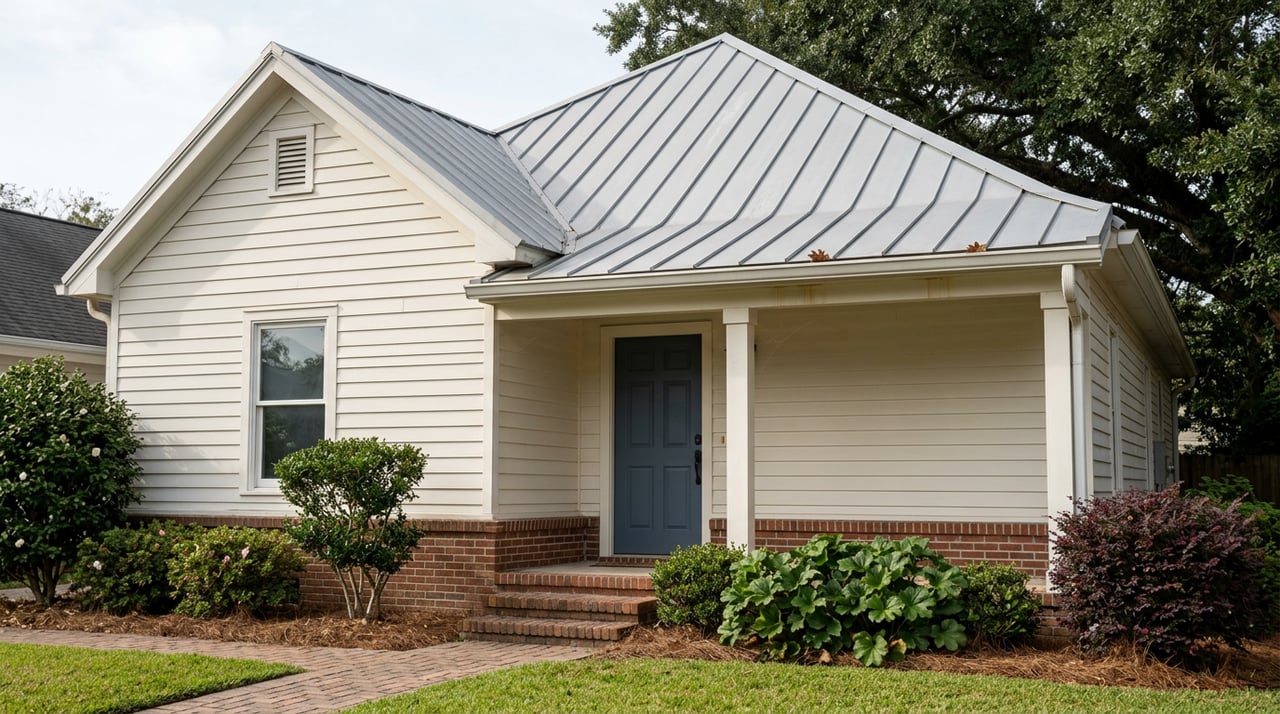
Most buyers touring a 1910 bungalow in North Hill or a raised cottage near Seville Square walk in worried about the wrong thing. They picture knob-and-tube wiring hiding behind the plaster and brace for a preservation board that will fight them over every outlet. Then the 4-point inspection comes back, the roof gets flagged, and the actual fight starts somewhere they never expected.
Here is the part nobody explains before you write an offer: in Pensacola's two protected historic districts, the roof is where insurance underwriting and preservation review collide. The wiring almost never is.
Two systems that don't talk to each other
North Hill and the Seville Historic District operate under the same city framework. The North Hill Preservation District was created in 1972 and formally organized as an association two years later, and it's recognized as one of the largest residential historic districts in Florida. Seville, sometimes called the Pensacola Historic District, was designated in 1970 and covers roughly 108 acres bounded by Bayfront Parkway, Tarragona, Romana, and Cevallos streets, built out mostly with 19th-century homes.
Both districts answer to the same authority: the City of Pensacola's Architectural Review Board, protected under Section 12-2-10 of the municipal code. The ARB's job is specific. It reviews any change that affects a property's exterior appearance, on all sides, including accessory structures like garages and major landscaping changes. That mandate is about what the street sees.
Meanwhile, a completely separate process runs on its own clock. Florida insurers require a 4-point inspection, covering roof, electrical, plumbing, and HVAC, on most homes 20 to 25 years and older before they'll write or renew a policy. A wind mitigation inspection runs alongside it, documenting roof covering, deck attachment, roof-to-wall connections, roof shape, secondary water resistance, and opening protection. Under Florida Statute 627.0629, carriers are required to apply premium credits for verified wind-loss mitigation features. That's not a courtesy discount. It's mandatory once the features are documented.
Neither process was built with the other in mind. In most Pensacola neighborhoods, that's fine, because they never touch. In North Hill and Seville, they touch at exactly one place: the roof.
Why the wiring worry is usually the wrong worry
Start with the reassurance, because buyers rarely hear it. Interior electrical work, plumbing repiping, and HVAC replacement don't require an exterior appearance review under the ARB's own scope. If the work happens inside the walls and doesn't change what the house looks like from the sidewalk, it isn't the preservation board's concern.
That matters because wiring is where Florida insurers actually draw hard lines. Active knob-and-tube wiring is effectively uninsurable. No standard Florida carrier will write a policy on it, and a full copper rewire is the only path forward. Cloth-sheathed wiring sits close behind, rarely insurable without a complete rewire. Aluminum branch wiring from the 1965 to 1975 window is more workable but still narrow: even after proper remediation with COPALUM or AlumiConn connectors, only about 6 of 17 major Florida carriers will accept the repair. The other 11 still want a full copper rewire regardless of how well the connectors were installed.
None of that runs through the ARB. A licensed electrician pulls a permit, the city inspector signs off, and the preservation board never enters the conversation. The obstacle is entirely financial and entirely insurance-driven, not architectural.
Where the actual friction lives
The roof is different, because it's the one system that sits on both lists at once.
An insurer's 4-point inspection on a house built before 1930 is going to flag roof age almost automatically. The fix an underwriter wants to see is straightforward: a permitted, wind-rated covering with documented deck attachment and, ideally, secondary water resistance, because that combination is what earns the statutory wind-mitigation credit. The fix an ARB wants to see is different: whatever change is proposed still has to read as appropriate for a home from the district's historic period, since the roof is unmistakably part of the exterior appearance the board is chartered to protect.
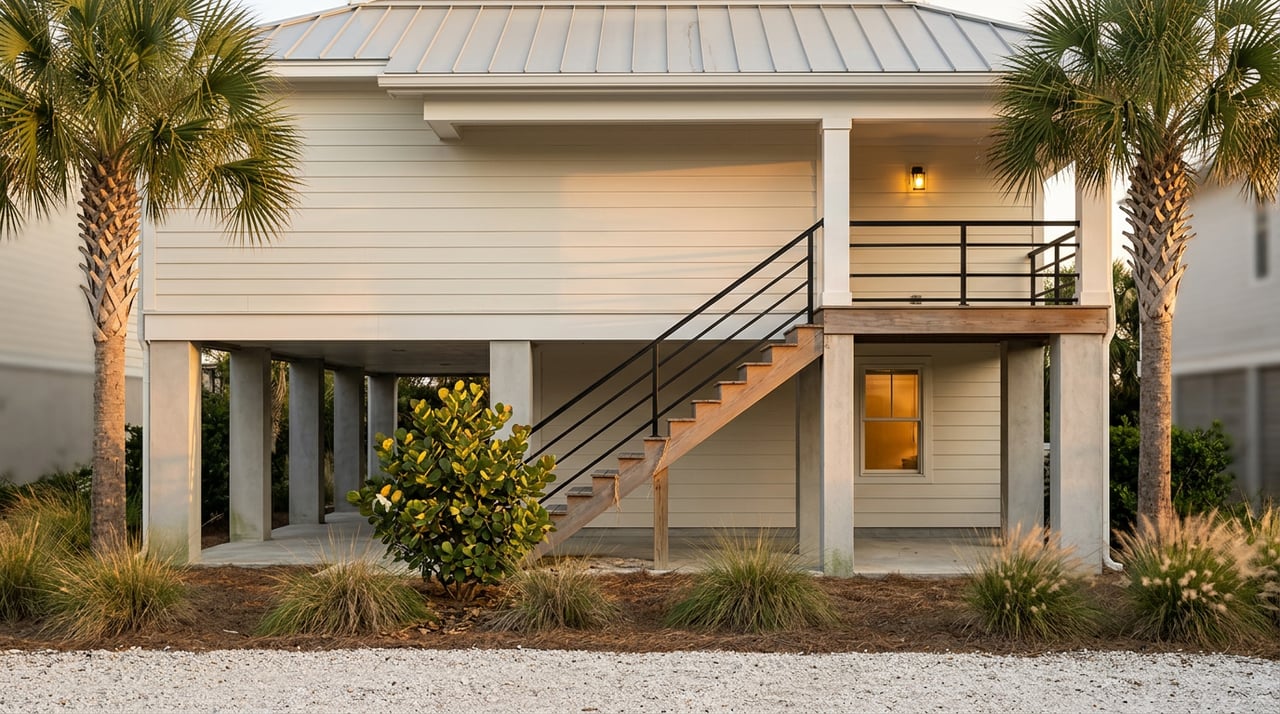
Those two goals aren't automatically opposed. Standing seam metal roofing, for instance, has deep roots in Gulf Coast construction and often reads as historically appropriate on the very houses where it also performs best in wind. The friction shows up in the specifics: the exact profile, the visible fastener pattern, the color, sometimes the flashing material. A product that satisfies an underwriter's wind-rating checklist can still need a second look from the board before it goes on a street-facing slope, and that review adds weeks a closing timeline doesn't always have.
The cost gap raises the stakes. Metal roofing in Florida generally costs two to three times as much to install as a comparable architectural shingle roof. Insurers can offer meaningful credit for either material, but the wind-portion savings on a policy, sometimes 15 to 35 percent depending on carrier and coverage, only show up after a licensed inspector documents the finished work on the current state form.
That form matters more this year than most. The Florida Office of Insurance Regulation rolled out a revised wind mitigation form, OIR-B1-1802, effective April 1, 2026, the first major overhaul in over a decade. Reports completed before that date generally remain valid for their full five-year window as long as nothing structural has changed. But if a 4-point inspection forces a reroof mid-transaction, the new inspection has to run on the current form, with tighter documentation requirements for permits and product approval numbers than the old version asked for.
What this looks like at the closing table
| Architectural Review Board | Insurance Underwriting | |
|---|---|---|
| Governs | Exterior-visible changes only | Whatever the 4-point and wind-mit inspections document |
| Cares about roof | Material, color, profile, historic appropriateness | Covering type, deck attachment, wind rating, permit status |
| Cares about wiring | Not within scope, interior work | Type of wiring, age, remediation, carrier acceptance |
| Timeline risk | Review and approval cycle before work starts | Inspection must post-date any roof work to claim credit |
The practical risk isn't that either process is unreasonable on its own. It's that a buyer's financing and closing date assume both processes finish on schedule, and they run on completely separate calendars.
A reasonable sequence looks like this:
- Order insurance quotes, including a 4-point and wind-mitigation inspection, early in due diligence, not the week before closing.
- If the roof gets flagged, get a sense of ARB feasibility for the replacement material before signing a contract with a roofer, especially on a street-facing elevation.
- Confirm whether an existing wind-mit report predates April 1, 2026. If it does and nothing structural has changed, it's likely still valid through its five-year window.
- Budget the timeline gap between ARB approval and insurer sign-off as its own line item, not an afterthought squeezed into the inspection period.
Historic North Hill and Seville properties tend to carry a premium over a typical Pensacola listing once lot size, walkability, and restoration condition are factored in, which means the dollars at stake in a roofing or insurance surprise are rarely small.
None of this is a reason to avoid a historic Pensacola property. It's a reason to run the insurance and preservation tracks in parallel from the start, instead of discovering in week three of a thirty-day contract that they were never on the same clock to begin with.
FAQ
Does the Architectural Review Board review electrical or plumbing work? No. The ARB's scope covers changes that affect a property's exterior appearance. Interior systems work that doesn't alter how the house looks from the street falls outside that review, though it still needs a standard city electrical or plumbing permit.
If my wind mitigation report predates April 2026, do I need a new one? Not automatically. Reports completed before the April 1, 2026 form revision generally remain valid for their full five-year window, provided no structural changes have been made to the home since the inspection.
Is a metal roof always approved for a North Hill or Seville home? Not automatically, even though standing seam metal has genuine historic precedent on Gulf Coast houses. Specific profile, fastener visibility, and color still go through exterior appearance review, so it's worth confirming feasibility before committing to a material for a street-facing slope.
If you're weighing a historic Pensacola purchase and want someone who can walk the insurance timeline and the preservation timeline side by side before you're under contract, reach out to Jason & Charlcie Smallwood at Bastion Realty South. If you're on the seller's side of one of these homes and want a clear read on where your property stands before you list, start with a Free Home Valuation and we'll walk through what buyers in this market are actually asking about.