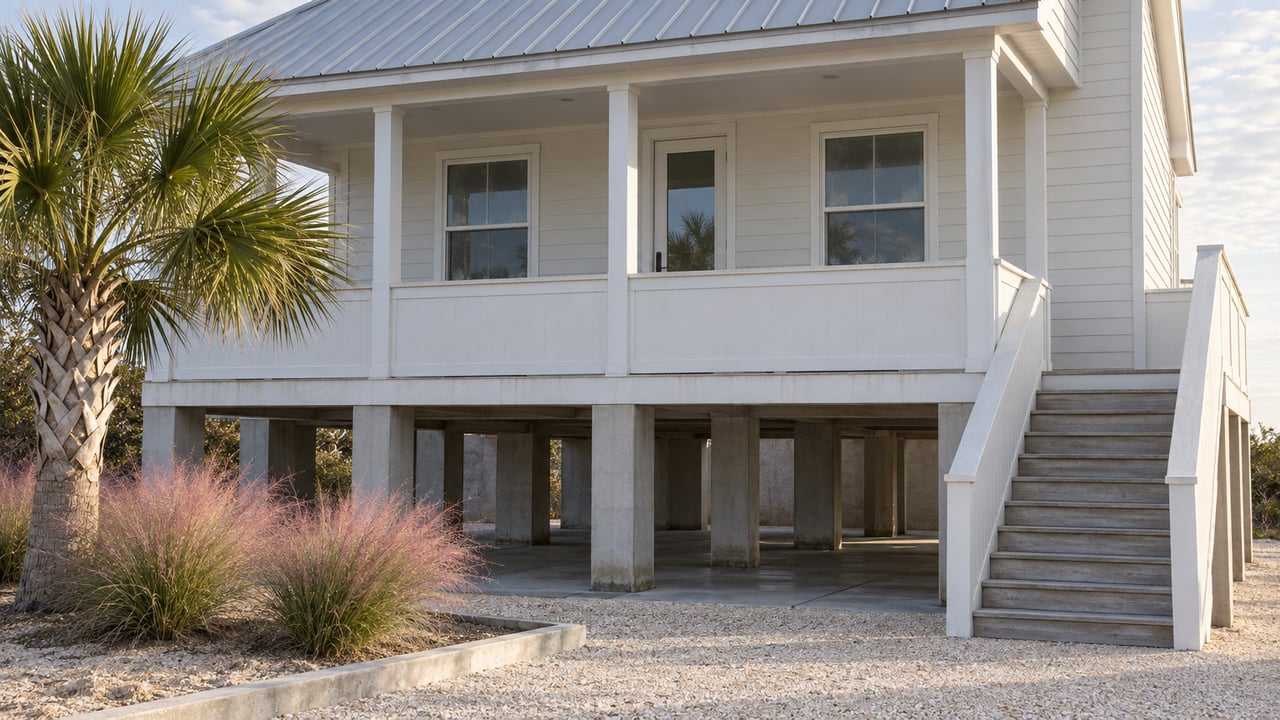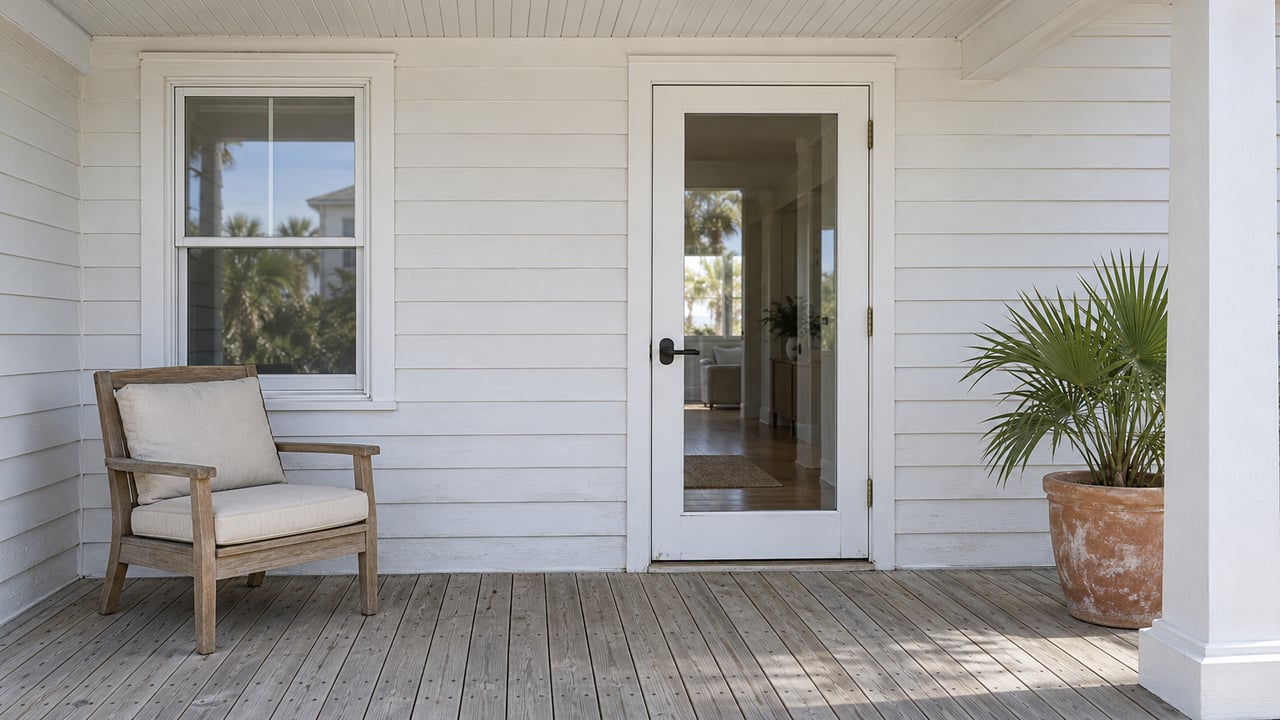
The Movoto median list price for a Pensacola Beach home in June 2026 was around $852,000 at roughly $601 per square foot, with a median 87 days on market. Redfin's most recent full month, March 2026, put the median sale at $843,000 and $540 per square foot, with homes taking about 107 days to sell. Those are the numbers a buyer sees on any portal. They describe a market that looks expensive and a little slow.
They do not describe what you are actually purchasing. On Pensacola Beach, the deed you sign at closing is not a deed to land. It is a leasehold, and the shape of that lease, more than the sale price, decides whether the deal is a bargain or a hidden bill.
What You Actually Buy When You "Buy" on Pensacola Beach
The federal government deeded Santa Rosa Island to Escambia County in the 1940s with a restriction that ran with the land: it could not be resold, only leased. Every home, condo, and business on the island's roughly 1,474 acres sits on a parcel leased through the Santa Rosa Island Authority, a body created by the Florida Legislature in 1947 under Chapter 24500. About 40 percent of the island is under residential and commercial lease; the other 60 percent is public land. The SRIA collects no tax revenue and is funded entirely by lease fees.
That structure explains a lot of what confuses first-time island buyers. When your title company hands you a closing statement, the "property" you are acquiring is a long-term possessory interest, not a fee simple lot. The county remains the landowner. The SRIA reviews improvements. Escambia County handles zoning and permits, because Pensacola Beach is unincorporated. All of that is workable, but none of it is the deal buyers assume they are making when they compare a $750,000 condo here to a $750,000 condo in a fee-simple market like Perdido Key or Gulf Shores.
The Four Costs That Sit Behind the Sticker Price
Here is the layered cost stack a Pensacola Beach owner actually carries, in the order most buyers underestimate them:
- The annual lease fee to the SRIA, payable whether or not you occupy the property, and adjusted on a schedule set in statute.
- Ad valorem property taxes to Escambia County, which leaseholders have paid since a 2011 assessment change was upheld by the Florida Supreme Court in 2014.
- Wind and flood insurance, on parcels where FEMA V and AE zone designations mean most federally backed mortgages require flood coverage in addition to hurricane wind coverage.
- HOA or condo association dues plus reserves, which on beachfront buildings can move sharply after a storm-related special assessment.
None of those four is unique to Pensacola Beach in isolation. The combination is. On a $750,000 financed purchase, published buyer-side closing cost ranges of 2 to 5 percent already put you at $15,000 to $37,500 before you fund the escrow for that first year of coastal insurance. Add the annual lease fee and the annual county tax bill on top of the mortgage, HOA, and premium, and the "carrying cost" number you modeled on your spreadsheet is almost certainly light.
The 1972 Line That Changes Everything
Not every Pensacola Beach lease behaves the same, and this is where local knowledge earns its keep. The SRIA's own finance staff has noted that leases written before 1972 typically do not contain a CPI escalator clause, while later leases do. Per statute the SRIA revisits lease fees every five years. In 2020 the Board approved a 7.7 percent increase phased in over five years. In November 2025, the Development and Leasing Committee declined a further CPI-based increase, so fees on escalator leases held steady for the current cycle.
| Feature | Pre-1972 leases | Post-1972 leases |
|---|---|---|
| CPI escalator clause | Typically none | Yes |
| Fee predictability | Higher | Adjusts every 5 years |
| Renewal handling | Case-by-case Board approval | Case-by-case Board approval |
| Buyer implication | Long-term cost more knowable | Model an escalation in your hold-period math |
Two identical-looking cottages, block for block, can carry meaningfully different long-term costs depending on when the underlying lease was executed. The same is true for renewals. The SRIA is currently approving 99-year lease renewals one at a time, with recent examples at 803 Largo, 1303 Ariola Drive, and 304 Avenida 15. If the lease attached to the home you are considering is late in its term, renewal terms and timing are a due diligence item, not a formality.
Why the Court Cases Still Matter to Your Closing Statement
For decades, the argument against taxing island homes was that leaseholders did not own land. The county, and later the courts, pushed the other direction. In a pair of unanimous opinions issued March 20, 2014, the Florida Supreme Court held that Pensacola Beach leaseholders have:
"virtually all the benefits and burdens of ownership."
That language, summarized by the Pensacola Beach Advocates, is the reason your annual property tax bill from Escambia County exists alongside your annual SRIA lease fee. A 2019 First District Court of Appeal ruling then affirmed a trial-court decision that the underlying land at Santa Rosa Dunes remains immune from ad valorem taxation because the county owns it, drawing a line between taxing the improvements and taxing the dirt.
Practical translation for a buyer: expect an ad valorem property tax bill on the leased improvements as if you owned the parcel, plus an annual lease fee for the land. Escambia County commissioners passed a 2011 resolution to pursue federal legislation permitting conveyance of fee simple title to leaseholders who want it, and enabling language exists at the federal level, but no one can force a leaseholder to accept a fee interest. The island is still, in practical terms, a leasehold market.
What the Current Market Is Telling Us
Now look back at the June 2026 Movoto figures with the cost stack in mind. A median list at $852,000, a median 87 days on market, and softening year-over-year prices are not just a demand story. They are also a friction story. Every buyer who runs a real carrying-cost model on an island condo has to reconcile lease fee plus property tax plus wind and flood coverage plus HOA dues. That reconciliation is why the same buyer's dollar often stretches further, on paper, in a fee-simple coastal market — and it is why sellers on the island typically need a longer runway to find the right buyer.
The condo segment shows the pattern most clearly. Homes.com's June 2026 pull for Pensacola Beach condos listed a median of $860,000 and an average sale of $1,003,784, with condos averaging 117 days on the market. Small-market thinness matters. As one local market commentary put it, on a barrier island where only a handful of comparable sales close in a given month, a single high-end closing can move the median. Rolling three-to-six month figures, separated between condos and single-family, are the honest read.
Due Diligence Questions to Ask Before You Write an Offer
Ask these before earnest money leaves your account, not after:
- Which SRIA lease is attached to this parcel, and is it pre- or post-1972? Get the executed lease document, not a summary.
- How many years remain on the current term, and has the leaseholder filed for renewal?
- What is the current annual lease fee, and when is the next scheduled review?
- What did the last two years of Escambia County ad valorem tax bills look like for this specific address?
- For condos, what are the master policy's wind and hurricane deductibles, how are they assessed at the owner level, and what do the reserves look like against the most recent reserve study?
- What FEMA flood zone is the parcel in, and what does a bindable flood quote actually cost in today's market?
- Does the condo declaration cap short-term rentals or set a minimum rental period stricter than county rules?
A buyer who can answer those seven questions in writing before the inspection period ends is not guessing at the deal. Everyone else is.
FAQ
Do I actually own anything on Pensacola Beach, or am I just renting from the county?
You own a long-term possessory interest, typically a 99-year leasehold, plus the improvements on the parcel. Since the 2014 Florida Supreme Court decisions, that interest is treated for property tax purposes as if you owned the land, even though title to the land itself remains with Escambia County.
Can I convert my lease to fee simple ownership?
Not unilaterally. Escambia County's 2011 resolution and later federal enabling language allow the county at its discretion to convey fee interests, and no leaseholder can be forced to accept one. Any specific parcel's path to fee simple depends on county action, and today the vast majority of the island remains leasehold.
Are lease fees going up?
They are set by statute to be revisited every five years. The 2020 SRIA action phased in a 7.7 percent increase over five years. In November 2025, a Development and Leasing Committee proposal to apply a further CPI-based increase did not move forward. Pre-1972 leases generally do not carry the CPI clause at all.
How does financing work on a leasehold condo?
Most lenders will finance a Pensacola Beach leasehold, but the lease term remaining, the association's financial health, and the master insurance structure all factor into loan approval. Coastal insurance escrows can materially change your cash to close.
Ready to price out the real cost of an island purchase?
Buying on Pensacola Beach rewards the buyers who understand the machinery underneath the price tag. If you want a side-by-side look at a specific address, including the lease document, the Escambia County tax history, and a realistic insurance-and-carrying-cost model, Jason and Charlcie Smallwood at Bastion Realty South will walk it with you before you write an offer. If you are on the selling side, Get Your Free Home Valuation and we will build a pricing plan that accounts for the island's real market rhythm, not just last month's median.