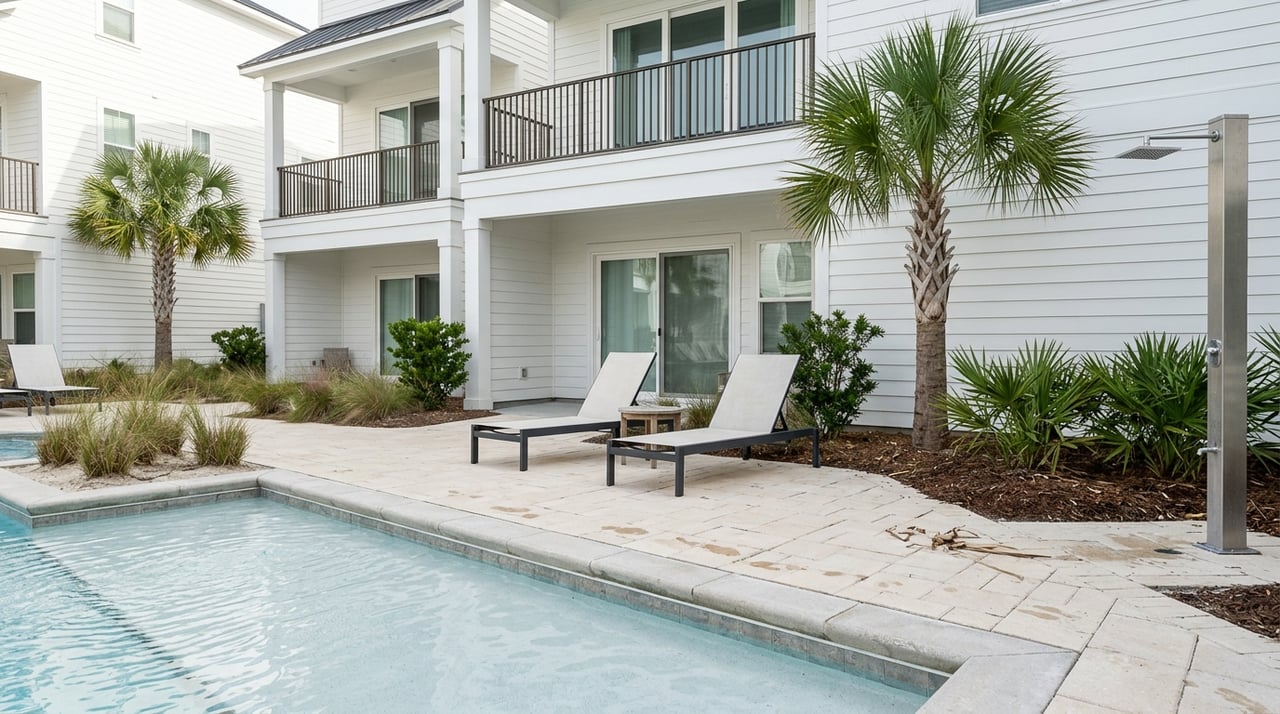
If you are shopping for a condo or vacation property on Pensacola Beach, the word amenities can sound simple. In reality, it can mean a mix of resort perks, association-maintained features, and public island infrastructure that all shape your day-to-day experience and long-term costs. When you understand how those pieces fit together, you can make a more confident decision about what you are really buying. Let’s dive in.
Pensacola Beach Amenities Work Differently
Pensacola Beach has a unique ownership and governance setup that matters to buyers. Escambia County owns the beach, and the Santa Rosa Island Authority, or SRIA, administers it. According to Escambia County, about 60 percent of Pensacola Beach is public use or public service land, while the remaining 40 percent is leased for residential and commercial use.
That setup means some of the features you may enjoy are not owned by a condo association at all. The SRIA handles beach maintenance, recreation facilities, and local rules, while Escambia County Public Works maintains public-facing areas such as walkovers, parking, parks, restrooms, the beach, the fishing pier, roads, and the Pensacola Beach Boardwalk. So when a listing mentions great amenities, it is smart to ask which ones are private and which ones are public.
HOA vs Condo Rules on Pensacola Beach
Before you focus on pools, spas, or beach access, start with the ownership structure. In Florida, condominium associations are governed by Chapter 718, while homeowners' associations are governed by Chapter 720. Both matter, but condo law is generally more detailed, especially when it comes to building safety and reserve funding.
For many Pensacola Beach buyers, this is important because condos are common in coastal and resort-style settings. A condo association may have broader recordkeeping duties and more defined reserve requirements than a typical homeowners' association. That can affect dues, future costs, and how much financial transparency you can expect during your review period.
Condo Documents You Should Review
Florida law gives condo buyers useful insight into how an association is run. Associations are required to keep official records such as the declaration, bylaws, articles, rules, board minutes, contracts, bids, permits, inspection reports, and the most recent structural integrity reserve study. Most official records must be kept in Florida for at least 7 years, and owners can request access within 10 working days.
That matters on Pensacola Beach because a beautiful building can still come with major future obligations. If you are comparing properties, document review helps you look past the marketing photos and understand how the building is managed. It also helps you spot whether dues are supporting regular upkeep, deferred maintenance, or upcoming repairs.
Reserve Studies and Building Costs Matter
For residential condo buildings that are three habitable stories or higher, Florida law requires a structural integrity reserve study at least every 10 years. For older associations that were unit-owner-controlled on or before July 1, 2022, the completion deadline was December 31, 2025, with limited timing flexibility tied to milestone inspections. For budgets adopted on or after December 31, 2024, required reserve items generally cannot be underfunded.
For you as a buyer, this is not just legal background. It can directly affect monthly dues, special assessments, and your comfort level with the building’s long-term maintenance plan. A resort-style property with a long amenity list may still need close review if reserve funding is tight or major repairs are ahead.
HOA Financial Reports Show What Dues Cover
If the property is in an HOA rather than a condo association, annual financial reporting is still a valuable tool. Florida HOA reports are prepared after each fiscal year, and the reporting level depends on the association’s size and revenue. These reports can include categories such as security, management, recreation facilities, building maintenance, insurance, taxes, and reserves.
That makes the budget one of the most useful documents you can review. It helps you see whether your dues are going toward amenities you expect to use, basic maintenance, or larger financial obligations. On Pensacola Beach, this can help you compare one property’s true value against another.
Common Resort Amenities on Pensacola Beach
Pensacola Beach is known for amenities that support a vacation lifestyle. Official resort listings show that buyers often encounter features like direct beach access, multiple pools, hot tubs, fitness centers, spas, on-site dining, tennis, concierge services, EV charging, and parking decks.
Some well-known resorts highlight how wide that range can be. Portofino Island Resort advertises 28 acres, more than 300 luxury accommodations, a 40,000-square-foot lifestyle center, eight heated pools including an indoor Olympic-size pool, a spa, a fitness center, tennis courts, waterfront dining, and family programs. Beach Club Resort and Spa advertises direct beach access, outdoor and heated indoor pools, a jacuzzi, a fitness facility, a spa, and balcony and full-kitchen accommodations.
Hilton Pensacola Beach advertises beachfront access, two waterfront outdoor pools, an indoor pool, a hot tub, a fitness center, on-site dining, EV charging, and paid parking and Wi-Fi. These examples are helpful because they show how different amenity packages can be, even within the same beach market. The details can shape both your personal use and your carrying costs.
Included Amenities vs Extra Charges
One of the biggest mistakes buyers make is assuming every advertised amenity is fully covered by dues. On Pensacola Beach, some services may be bundled, while others may involve separate charges, paid access, or discounts rather than full inclusion. That is especially important if you are buying a second home or evaluating a property for short-term rental use.
You will want clear answers on what is truly included. For example, a property may offer access to dining, spa services, premium fitness options, parking, or internet, but not all of those items are necessarily part of the standard ownership cost. The more resort-like the property feels, the more important the fine print becomes.
Public Amenities Also Shape Value
Part of Pensacola Beach’s appeal comes from amenities that are public, not association-owned. Escambia County Public Works maintains walkovers, parking, parks, restrooms, the beach, the fishing pier, roads, and the boardwalk. Those features contribute to the island experience and can make an area feel more convenient and visitor-friendly.
This is one reason buyers should think beyond the condo gate. A building with fewer private amenities may still offer strong lifestyle appeal because of nearby public infrastructure. In other words, value on Pensacola Beach is often a combination of what the association controls and what the island already provides.
Beach Rules Can Affect Ownership
Beach living comes with rules that owners and guests need to follow. Escambia County requires personal items such as umbrellas, tents, hammocks, toys, picnic tables, and chairs to be removed from the beach at the end of each day. Glass is prohibited, open flames and private grills are not allowed on the beach, dogs other than service animals are limited to designated dog parks, and the west side of the Pensacola Gulf Pier is an alcohol-free zone.
These rules may seem small at first, but they can affect how you use the property and what guests should know before arrival. If you are considering a vacation rental, they also matter from a planning and communication standpoint. A smooth guest experience often depends on sharing clear expectations upfront.
Lighting and Coastal Compliance
Another issue buyers should understand is coastal lighting. Escambia County’s barrier-island lighting ordinance says updated guidance applies to Pensacola Beach, new construction must comply immediately, and existing properties have until January 1, 2028 to comply. On Pensacola Beach, any light directly or indirectly visible from the marine beach must use wildlife-friendly lighting.
This may affect renovation planning, exterior updates, and future ownership costs. If you are buying an older property, it is worth asking whether lighting has already been updated or whether compliance work may still be needed. This is one more example of why coastal ownership requires more than a quick look at the amenity sheet.
Floodplain Rules Can Influence Costs
Storm recovery and floodplain compliance also matter on Pensacola Beach. Escambia County says properties in a special flood hazard area need specific permitting documents after flood damage. Buildings that are substantially damaged or substantially improved may need to be brought into compliance with county floodplain rules, including possible elevation to or above the 100-year flood elevation.
That does not mean every property will face the same situation, but it does mean the risk profile is part of the ownership picture. If you are buying on the beach, you should look at more than views and rental potential. You should also understand how flood-related rules could affect future repairs, improvements, and costs.
Do Not Forget Island Access Costs
There is also a small but recurring cost tied to island access. The Bob Sikes Toll Bridge is cashless and charges $1 per crossing, and TOLL-BY-PLATE users pay a monthly administrative fee. For a second-home owner or a short-term rental buyer, that may become part of routine travel and guest logistics.
On its own, it may not be a major budget item. Still, it is one more practical detail to factor into ownership planning. On Pensacola Beach, the best buying decisions usually come from understanding the small recurring costs as well as the obvious headline features.
Questions to Ask Before You Buy
When you are evaluating HOA or resort amenities on Pensacola Beach, ask direct questions early. A strong review process can save you from surprises later.
Here are some of the most important ones to cover:
- Is the property a condo, townhome HOA, or another ownership structure?
- Can you review the declaration, bylaws, rules, current budget, annual financial report, insurance policies, inspection reports, reserve study, and any management or rental agreements?
- What are the current dues, reserve funding levels, and any special assessments or planned loans?
- Are short-term rentals allowed, and if so, what are the minimum stay rules, occupancy limits, parking rules, pet rules, and guest registration requirements?
- Which amenities are included in dues, and which involve separate charges, access fees, or third-party management?
- Is there a bridge toll or other recurring island-access cost that should be part of your budget?
The goal is simple. You want to know whether the lifestyle, rules, and financial structure all fit your plans.
What This Means for Pensacola Beach Buyers
On Pensacola Beach, amenities can absolutely add to lifestyle value and guest appeal. Pools, beach access, fitness facilities, and on-site services may improve how you use the property and how attractive it feels to future guests or buyers. But those features are only part of the story.
The full ownership picture also includes association documents, reserve obligations, beach rules, public infrastructure, access costs, lighting compliance, and floodplain requirements. When you look at all of those pieces together, you can make a smarter decision and avoid confusing a great vacation brochure with a complete ownership analysis.
If you are weighing a condo, second home, or investment property on Pensacola Beach, working with a local team can help you sort out what is public, private, included, and still worth a closer look. For practical guidance tailored to your goals, connect with Jason & Charlcie Smallwood.
FAQs
What do HOA amenities mean on Pensacola Beach?
- On Pensacola Beach, amenities can include association-owned features like pools or fitness centers, but they can also include nearby public infrastructure such as walkovers, parks, restrooms, roads, and the boardwalk maintained by Escambia County.
What is the difference between a condo association and an HOA in Florida?
- Condo associations are governed by Chapter 718 and usually have more detailed rules on building safety and reserves, while homeowners' associations are governed by Chapter 720 and focus more on records, budgets, and financial reporting.
What documents should you review before buying a Pensacola Beach condo?
- You should review the declaration, bylaws, rules, current budget, annual financials, insurance policies, inspection reports, reserve study, and any management or rental agreements tied to the property.
Are resort amenities on Pensacola Beach always included in HOA dues?
- No. Some amenities or services may be included, while others may involve separate charges, access fees, paid parking, Wi-Fi fees, or third-party management arrangements.
Do beach rules affect Pensacola Beach condo owners and guests?
- Yes. Escambia County beach rules cover things like daily removal of personal items, bans on glass and open flames, dog restrictions outside designated parks, and an alcohol-free zone near part of the pier.
Are there special lighting rules for Pensacola Beach properties?
- Yes. On Pensacola Beach, lights visible from the marine beach must use wildlife-friendly lighting, new construction must comply immediately, and existing properties have until January 1, 2028 to comply.
Does floodplain compliance matter when buying on Pensacola Beach?
- Yes. In special flood hazard areas, flood damage repairs may require specific permitting documents, and substantially damaged or improved buildings may need to meet county floodplain standards, including possible elevation requirements.
Is there a toll to access Pensacola Beach?
- Yes. The Bob Sikes Toll Bridge is cashless and charges $1 per crossing, and TOLL-BY-PLATE users also pay a monthly administrative fee.